
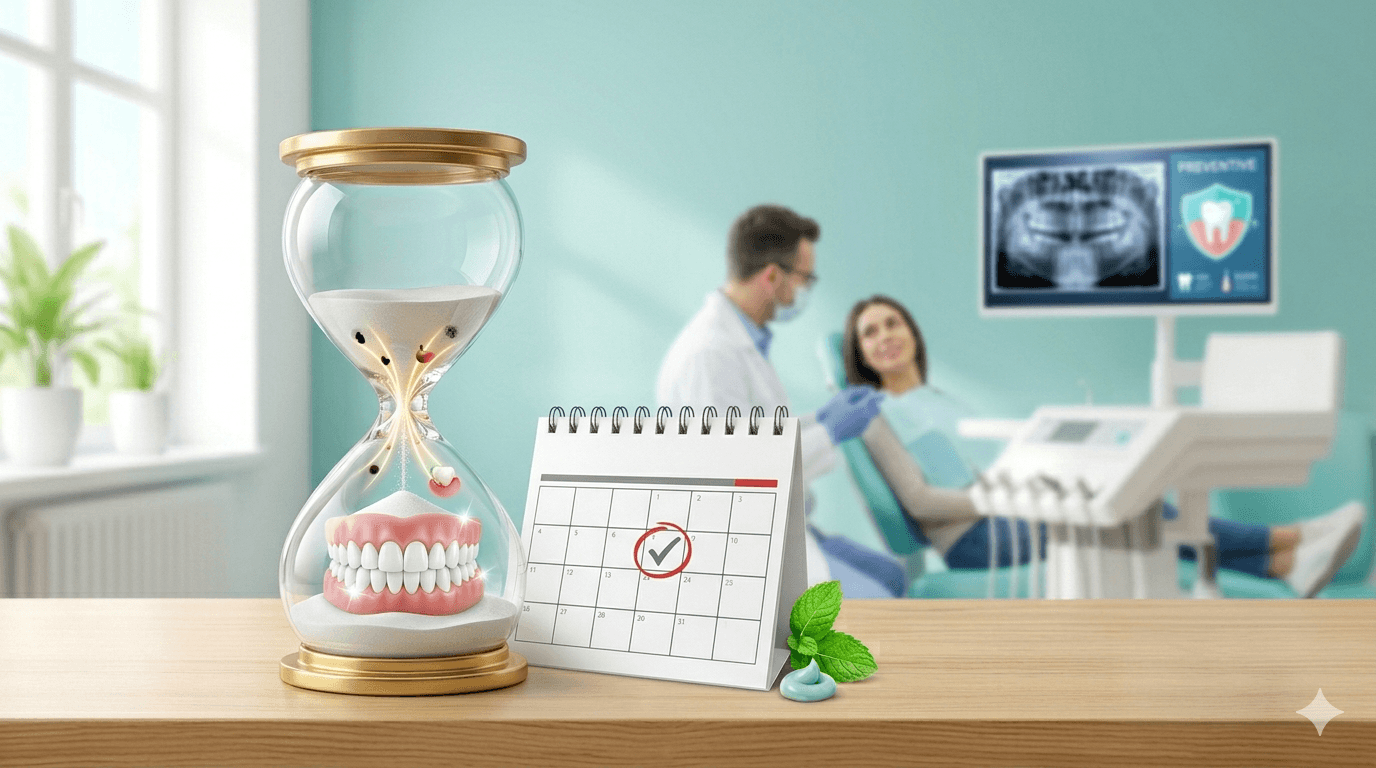
General oral health information
Dental examination intervals are individual. A clinician may consider age, medical history, previous decay, gum health, oral hygiene, tobacco or alcohol use, and current symptoms when recommending follow-up.
An examination may include inspection of the teeth, gums, oral mucosa, bite, restorations, and areas of concern. Radiographs are recommended when clinical findings and risk indicate that imaging may help diagnosis or treatment planning.
Professional cleaning can remove hardened deposits that cannot be removed with a toothbrush. It does not replace daily brushing and cleaning between the teeth.
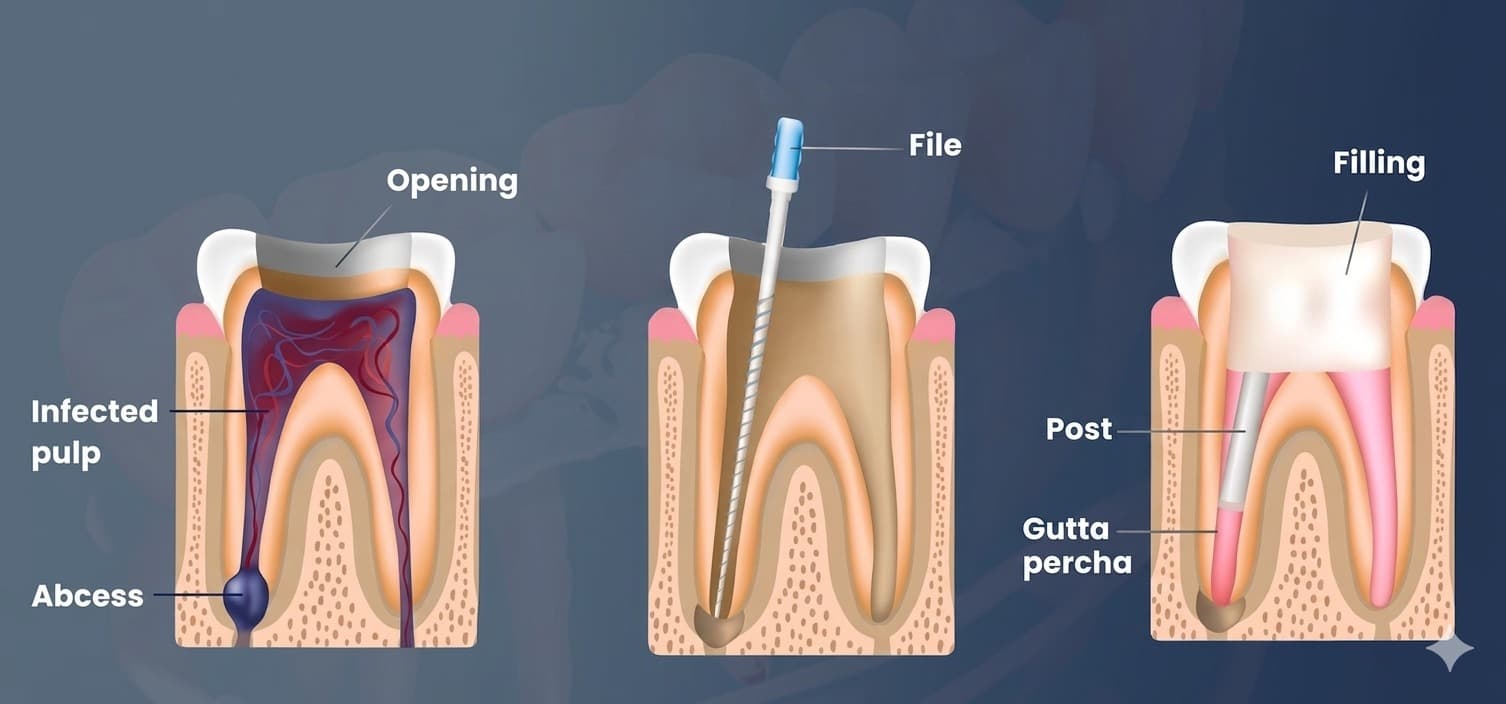
Pain is not required for a dental problem to be present. Contact a dentist if you notice swelling, bleeding, a broken tooth, persistent sensitivity, or a change that does not resolve.
Regular care supports early assessment, but no examination can prevent every dental problem. Follow-up should be based on the individual clinical record.